
AI Receptionist for Auto Repair Shops: Answer Every Call
Auto repair shops miss 30%+ of calls. An AI receptionist answers every ring, books appointments, and captures vehicle details while you work.
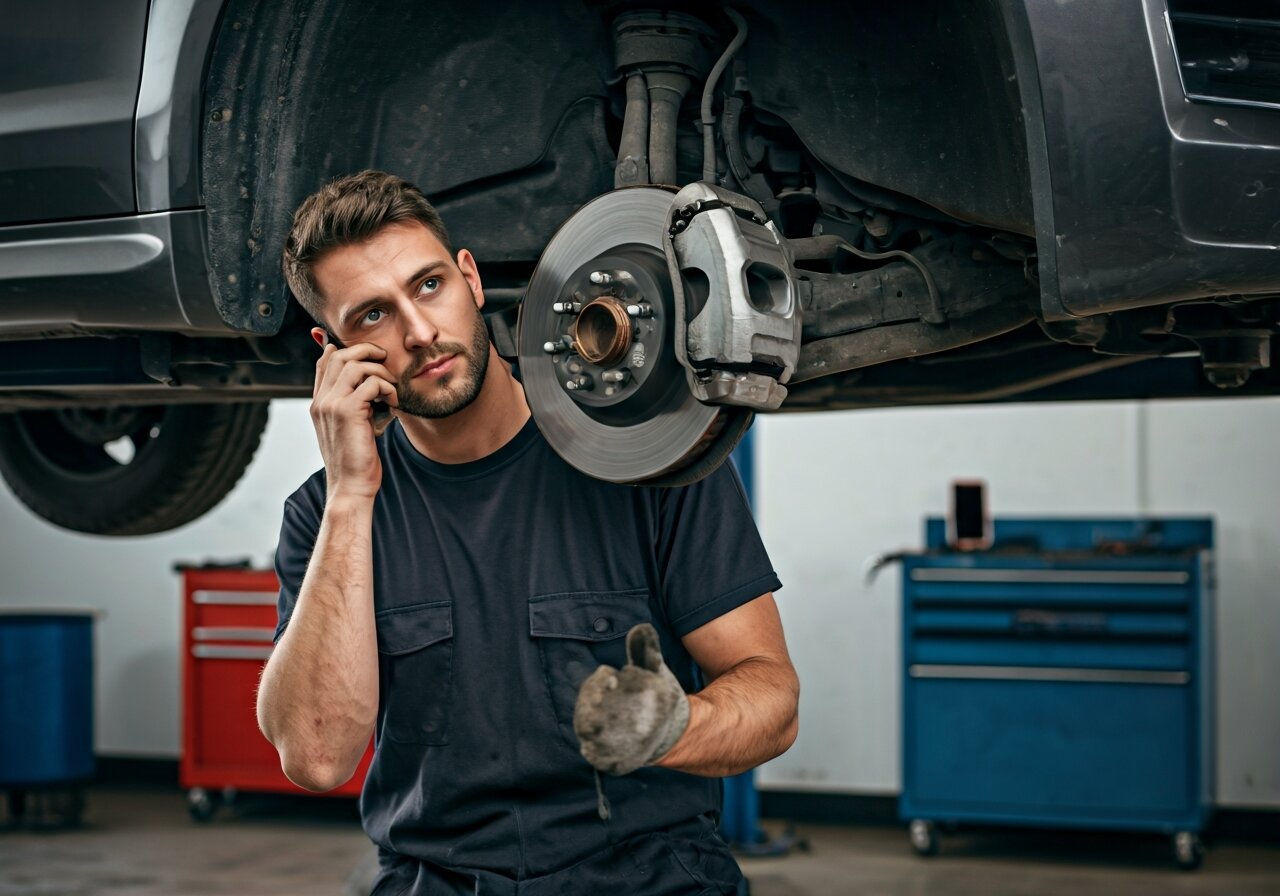
An AI receptionist for auto repair shops is a virtual phone agent that answers every call, books service appointments, captures vehicle information, and handles after-hours inquiries automatically. It solves a problem unique to the trade: mechanics physically cannot pick up the phone when they're underneath a car, running a lift, or using an impact wrench in a noisy bay. Instead of sending callers to voicemail (where most hang up), an AI receptionist handles the conversation in real time, 24 hours a day.
TL;DR
- Auto repair shops miss an estimated 30% or more of inbound calls because techs are hands-deep in engines and shop noise drowns out the ring.
- An AI receptionist answers instantly, collects year/make/model, schedules service bays, and texts confirmations.
- It costs a fraction of a full-time front desk hire and never calls in sick.
- After-hours tow and emergency inquiries get handled instead of lost.
- Customers get fast, accurate responses. Most cannot tell (and do not care) that it is AI.
The Auto Repair Phone Problem
Walk into any independent shop or tire center during business hours and you will notice the same thing: the phone rings, nobody answers. The owner is writing an estimate. The lead tech is torquing lug nuts. The service writer is explaining a brake job to someone at the counter. By the time anyone gets to the phone, the caller has already dialed the next shop in Google results.
This is not a staffing failure. It is a structural one. Auto repair is a hands-on trade. The people who know the answers are the same people who cannot stop what they are doing to pick up a call. Hiring a dedicated receptionist solves the problem but introduces a new one: payroll.
According to the Bureau of Labor Statistics, the median annual wage for receptionists in the U.S. was $36,920 as of May 2024 (BLS Occupational Outlook). For a small shop running on thin margins, that is a significant line item for someone who may sit idle between call bursts and cannot work evenings or weekends without overtime.
How an AI Receptionist Works in a Shop Setting
An AI receptionist is not a simple IVR menu or a robotic "press 1 for service" tree. It is a conversational phone agent that speaks naturally, listens to callers, and takes action based on what they need. Here is what that looks like for a typical auto repair operation.
Answering During Shop Hours
When a customer calls to ask about brake pad replacement on a 2019 Honda CR-V, the AI receptionist picks up on the first ring. It greets the caller by the shop's name, asks clarifying questions (front or rear brakes? any grinding noise?), provides a ballpark if you have configured pricing ranges, and books the vehicle into an open service bay slot. The customer gets a text confirmation with the date, time, and shop address.
Meanwhile, nobody in the shop had to wash their hands, walk to the front desk, or put a customer on hold.
Capturing Vehicle Details
Auto repair is one of the few industries where the "customer" is really two entities: the person and the vehicle. Every call needs to collect year, make, model, and often mileage or VIN. An AI receptionist asks for this information conversationally, stores it with the appointment, and passes it along so the tech knows what is rolling in before it arrives.
After-Hours and Emergency Calls
A car breaks down at 9 PM on a Tuesday. The driver searches "auto repair near me" and calls the first result. If that call goes to a generic voicemail greeting, the driver moves on. If an AI receptionist answers, it can explain your hours, take down the vehicle's location and issue, offer towing partner information, and schedule a first-thing-in-the-morning appointment. That caller becomes a customer instead of a competitor's customer.
Service Reminder Texts
For shops that do oil changes, tire rotations, and other recurring maintenance, the AI can send follow-up texts reminding customers when their next service is due. This turns a one-time visit into a recurring revenue relationship without anyone at the shop manually tracking mileage intervals.
AI Receptionist vs. Front Desk Hire
The table below compares a full-time receptionist with an AI receptionist for a typical independent auto repair shop.
| Full-Time Receptionist | AI Receptionist | |
|---|---|---|
| Annual cost | $37,000 to $45,000+ (salary, benefits, taxes) | $285 to $1,200/year (typical AI plans) |
| Hours covered | 40 hrs/week, no evenings or weekends without OT | 24/7/365 |
| Simultaneous calls | 1 at a time | Unlimited |
| Sick days / vacation | Yes | None |
| Vehicle info capture | Depends on training | Consistent every call |
| Appointment booking | Manual, error-prone under pressure | Automated, synced to calendar |
| After-hours coverage | Voicemail or answering service ($200+/mo) | Included |
| Ramp-up time | 2 to 4 weeks of training | Same day |
| Bilingual support | Requires bilingual hire | Built in (Spanish, French, and more) |
This is not about replacing a great service writer who builds relationships at the counter. It is about making sure the phone gets answered every single time, especially when that service writer is already busy with a customer standing in front of them.
Addressing the "Customers Want a Real Person" Objection
This is the most common pushback shop owners raise, and it deserves a direct answer.
Some customers do prefer a human. But here is what they prefer even more: getting their call answered. A 2023 study by Invoca found that 76% of consumers say an unanswered call negatively impacts their perception of a business. The choice is not between "AI" and "a real person." The choice is between "AI" and "voicemail." Voicemail loses.
Modern AI voice agents sound natural. They handle conversational flow, understand context, and respond to interruptions. Most callers do not realize they are speaking with AI. And for those who do, the experience of getting an immediate, helpful answer outweighs the novelty of the technology.
For shop owners who still want a personal touch, the best approach is hybrid: the AI handles overflow, after-hours, and high-volume periods while the owner or service writer takes calls when they are free. The AI acts as a safety net, not a wall.
Use Cases Beyond the Service Bay
While scheduling is the primary use case, auto repair shops use AI receptionists for several other tasks.
Pricing inquiries. "How much for an oil change?" is probably your most common call. Configure the AI with your standard service prices, and it handles these calls in seconds. No tech pulled off a job to quote a $49.99 synthetic blend change.
Estimate follow-ups. Customer received an estimate yesterday and is calling back to approve the work. The AI captures the approval and notifies the shop so parts can be ordered.
Tow coordination. For shops that partner with towing services, the AI can collect breakdown location, vehicle details, and preferred drop-off time, then relay everything to your tow partner.
Fleet and commercial accounts. Shops that service fleet vehicles (landscaping companies, delivery services, HVAC contractors) often deal with dispatchers calling to schedule multiple vehicles. The AI handles these calls methodically, collecting details for each unit.
Lead capture for new customers. First-time callers who are price shopping get a professional, instant response. That first impression often determines whether they book with you or keep scrolling. Capturing their name and number means you can follow up even if they do not book immediately.
What Auto Repair Shops Should Look For
Not every AI receptionist product fits a trade business. If you are evaluating options, look for:
- Custom greeting and personality. The AI should sound like your shop, not a generic call center.
- Configurable knowledge base. You need to input your services, hours, pricing ranges, and policies so the AI gives accurate answers.
- Calendar integration. Booking should sync to your actual schedule, not just collect a "preferred time" that someone has to manually check.
- SMS confirmations. Callers should get a text with appointment details. This reduces no-shows.
- Call summaries. After each call, you should get a summary (text or email) of what was discussed and what action was taken.
- Bilingual support. In many markets, Spanish-language support is not optional. It is a revenue driver.
These are standard features in purpose-built solutions. Compare options and pricing to find the right fit for your shop size and call volume.

Getting Started
Setting up an AI receptionist for an auto repair shop typically takes less than a day. The process involves:
- Providing your shop name, hours, address, and service list.
- Configuring pricing ranges for common services (oil change, brake pads, tire rotation, alignment, etc.).
- Connecting your booking calendar.
- Forwarding your shop phone to the AI number (or setting it as a fallback when calls go unanswered).
- Testing with a few calls to fine-tune responses.
Once live, the AI handles calls immediately. There is no training period, no learning curve, and no two-week notice if it does not work out.
If your shop serves contractors or other trade businesses, the same system handles those calls too. The AI adapts to whatever industry context you configure.
Frequently Asked Questions
Can an AI receptionist handle technical auto repair questions?
It handles the questions you train it on. For common services (brakes, oil changes, tires, alignments, diagnostics), you configure pricing and descriptions. For complex or unusual requests, the AI collects the caller's information and flags it for a callback from a tech who can give a proper diagnosis.
Will customers know they are talking to AI?
Most will not. Modern AI voice agents use natural speech patterns, handle pauses and interruptions, and respond contextually. In post-call surveys across industries, the majority of callers report a positive experience regardless of whether the agent was human or AI.
What happens if the AI cannot answer a question?
It collects the caller's name, number, and question, then sends an immediate notification to the shop so a human can call back. No caller is left stranded.
Does it work with my existing phone number?
Yes. Most setups use conditional call forwarding: if nobody at the shop picks up within a few rings, the call forwards to the AI. You keep your existing number and your existing workflow.
How much does an AI receptionist cost for a small shop?
Plans typically range from $25 to $100 per month depending on call volume. That is roughly 1% of the cost of a full-time receptionist. See current pricing for details.
Can it schedule appointments for multiple service bays?
Yes. If your shop runs two or three bays with different availability, the AI can manage separate calendars and book accordingly, preventing double-booking and optimizing bay utilization.
Does it handle Spanish-speaking callers?
Yes. Bilingual AI receptionists detect the caller's language and respond accordingly. No need to hire a bilingual receptionist or lose Spanish-speaking customers to a language barrier.
Get notified when ZenOp launches in your area
We're rolling out across the US. Be the first to know when ZenOp is available for your business.
No spam. Just launch updates.